
The Educational Apocalypse: 3.65 Terabytes of Compromised Futures
In the spring of 2026, the global cybersecurity community watched in horror as a worst-case scenario unfolded in real-time. For years, security analysts had warned that the educational technology (EdTech) sector was a ticking time bomb. Schools and universities hold massive, highly concentrated databases of pristine personal information, yet they are historically underfunded and defended by outdated, porous IT infrastructure. In late April 2026, that bomb detonated.
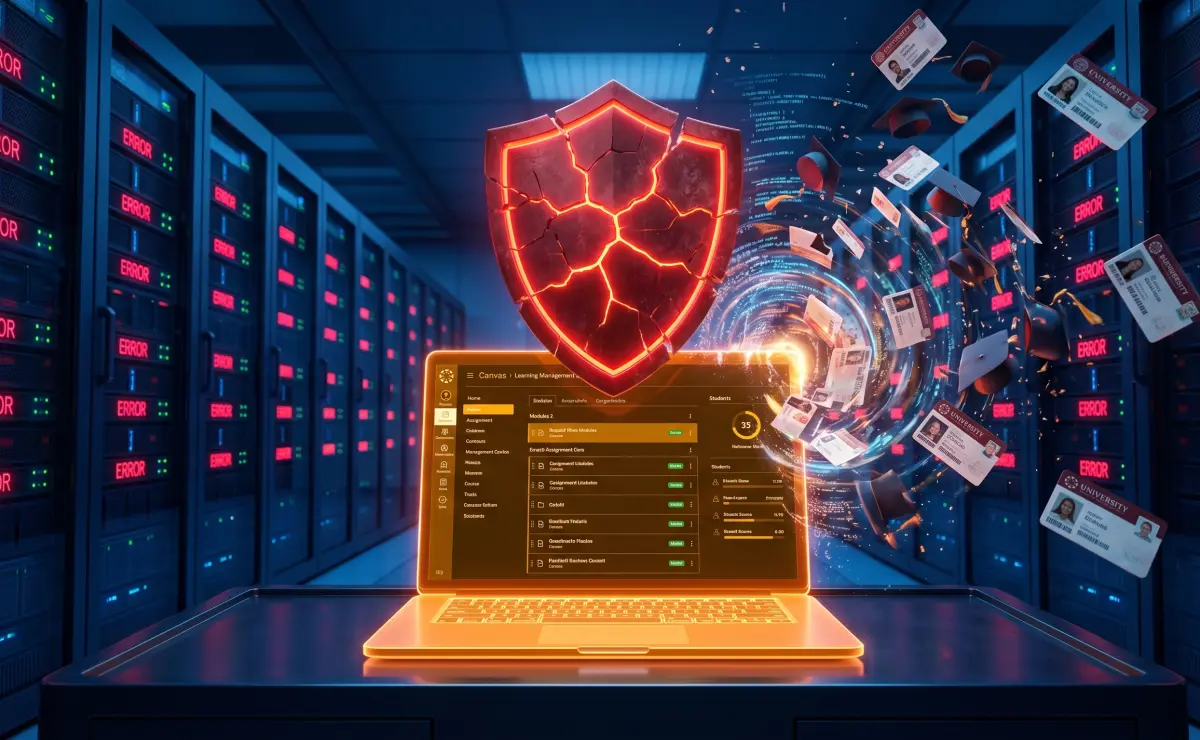
Instructure, the massive corporate entity behind the globally ubiquitous Canvas Learning Management System (LMS), confirmed a devastating unauthorized intrusion. The scale of the attack defies comprehension. The cyber-extortion syndicate known as ShinyHunters claimed to have exfiltrated a staggering 3.65 Terabytes of internal data. This single breach potentially impacted 275 million individual students, educators, and administrative staff across nearly 9,000 educational institutions worldwide.
This is not a story about a hacker stealing a few credit card numbers from a retail website. This is the wholesale extraction of the digital identities of an entire generation of students. Let's examine the forensics of the Instructure Canvas infiltration, analyze the unique danger of compromised academic data, and outline the immediate, aggressive steps you must take to secure your digital footprint before the syndicates weaponize this massive data dump.
The Mechanics of the Instructure Breach
The attack on Instructure was not a random act of digital vandalism. It was a calculated, sustained operation executed by ShinyHunters—a highly organized, financially motivated extortion group responsible for some of the most destructive data heists of 2026, including the Follett Software educational breach.
The Timeline of Infiltration
According to the official post-mortem and forensic reports, the unauthorized access was first detected on April 29, 2026. However, sophisticated cyber syndicates rarely execute a "smash and grab." They utilize a technique called "dwell time." The attackers likely established a quiet foothold in Instructure's peripheral networks weeks earlier, silently escalating their privileges and mapping the internal architecture before finally locating and extracting the core databases containing user data.
The timing of the attack was also highly strategic. By striking in late April and early May, ShinyHunters maximized psychological pressure. This is the exact moment when thousands of universities are administering final exams and submitting final grades. The disruption to the global academic calendar was catastrophic, forcing institutions to scramble their IT teams at the worst possible moment.
What the Syndicates Actually Stole
When a breach of this magnitude occurs, the immediate corporate response is often to reassure the public about what wasn't stolen. Instructure was quick to state that there was no evidence that user passwords, financial information, dates of birth, or government identifiers (like Social Security Numbers) were exposed.
However, what was exposed is more than enough to destroy a digital identity. Instructure confirmed that the attackers successfully exfiltrated user names, primary email addresses, Student Identification Numbers, and, most chillingly, the private internal messages sent within the Canvas platform.
This is the modern reality of cybercrime: hackers do not need your password if they have your context. A hacker armed with your full legal name, your student ID, your university email, and the text of a private message you sent to your biology professor possesses a terrifying level of credibility. They use this contextual data to launch unstoppable social engineering attacks.
The Threat of Contextual Weaponization
If you are one of the 275 million users caught in the Canvas breach, you must understand how ShinyHunters and subsequent buyers on the dark web will use your data. The threat is not that someone will log into Canvas and change your grades. The threat is how this data is combined with other breaches.
The Hyper-Realistic Phishing Campaign
With your university email and your Student ID, cybercriminals can bypass almost all standard skepticism. You will not receive a generic spam email riddled with typos. You will receive a highly professional, perfectly formatted email that appears to come directly from your university's Financial Aid office or IT department.
The email will state your exact Student ID and claim there is an "urgent issue" with your tuition payment or your course registration for the upcoming semester. It will instruct you to click a link to log into the university portal to resolve the issue immediately. Because the email contains accurate, private information stolen in the Canvas breach, you will likely click it. The link will route you to a hyper-realistic, fake login page. The moment you type your university password, the syndicates capture it. They then use that password to access your actual university account, where they can redirect financial aid disbursements to offshore bank accounts.
The Amplification Effect
The danger is exponentially increased if you are guilty of password recycling. If the syndicates successfully phish your university password, they immediately load that password into massive botnets. These botnets test your university email and password combination against hundreds of other websites—your bank, your social media, your cryptocurrency exchange. If you used the same password, a breach at an educational software company results in a completely drained bank account. This cascading failure is exactly how the massive CarGurus user leak was monetized.
The Extortion Resolution and the "Digital Confirmation"
The conclusion of the Instructure breach highlighted a controversial and secretive aspect of modern cybersecurity. As the pressure mounted and global educational operations ground to a halt, reports surfaced that Instructure had reached an agreement with ShinyHunters. The company reportedly received "digital confirmation" from the extortionists that the stolen 3.65 Terabytes of data had been permanently deleted.
In the cybersecurity intelligence community, "reaching an agreement" is the polite, corporate term for paying a massive multi-million dollar ransom. While paying the ransom may have prevented the immediate public release of the data, it is a catastrophic systemic failure. Relying on the "honor code" of international cyber-extortionists is incredibly dangerous. There is zero mathematical guarantee that ShinyHunters did not make a copy of the database before deleting it, or that they haven't already sold fragments of the data to secondary brokers on the dark web.
The Academic Lockdown Protocol
You cannot rely on a ransom payment or a corporate apology to protect your identity. The data of 275 million people was out of Instructure's control for weeks. You must assume your data has been compromised and execute a proactive defensive protocol immediately.
1. Cryptographic Exposure Verification
Your absolute first priority is to determine if your university email address or personal contact information has surfaced in the initial dark web samples associated with the Canvas breach.
You must use a secure verification engine. Do not type your email into unverified, shady websites that claim to check your exposure. Use our zero-knowledge scanner. When a breach of this magnitude occurs, thousands of users panic and ask, "am I pwned?" Our architecture ensures your privacy. Your email is hashed locally in your browser, and we only query a microscopic fragment of that hash against our multi-terabyte database of known 2026 leaks. We never see your email. If your academic address triggers a red alert, you are in the immediate crosshairs of advanced phishing campaigns.
2. The Zero-Trust Communication Rule
Because the Canvas breach exposed deeply personal, contextual information, you must immediately adopt a Zero-Trust posture toward all communications regarding your education or finances.
If you receive an email, a text message, or a phone call claiming to be from your university, your professor, or your financial aid office—even if they know your Student ID—do not trust it. Never click links in emails demanding urgent action. Open a new, secure browser window, manually type the official URL of your university portal, and log in directly to check for any alerts.
3. The Immediate Credential Rotation
Even though Instructure stated that passwords were not directly exposed in the 3.65 Terabyte exfiltration, you must proactively sever any potential access vectors.
Log into your university portal and change your password immediately. More importantly, if you have integrated any third-party applications or plugins with your Canvas account, navigate to your security settings and revoke all active API tokens and permissions. A compromised third-party app can provide a backdoor directly into your account.
4. Eradicate Password Reuse
The syndicates are relying on your laziness. They are banking on the probability that you use the exact same password for your Canvas account as you do for your personal email and your online banking.
You must transition to a dedicated Password Manager (like Bitwarden or 1Password). Generate a unique, chaotic, 24-character cryptographic password for every single digital account you own. Never trust your biological memory to store an authentication key. If you decouple your passwords, a breach on an educational platform remains isolated and cannot spread to your financial assets.
The End of Institutional Trust
The 2026 Instructure Canvas breach is a watershed moment in digital security. It proves that the institutions we trust to educate us—and the software vendors they rely on—are fundamentally incapable of defending our data against elite extortion syndicates. The era of trusting a corporate firewall is over. You must take personal, proactive control of your digital perimeter. Secure your passwords, adopt a Zero-Trust mindset, run a check on our secure scanner, and make yourself a hardened target in a world where your academic history is treated as a highly profitable commodity.
Sources & Further Reading
The information in this article is based on the following authoritative sources:
- CERT-In (Indian Computer Emergency Response Team) — India's national cybersecurity agency — official advisories and breach alerts.
- Cybersecurity & Infrastructure Security Agency (CISA) — US government agency providing cybersecurity guidance and incident alerts.
- Identity Theft Resource Center (ITRC) — Authoritative non-profit tracking data breaches and identity theft globally.
Pwned Checker is committed to citing official and authoritative sources. All external links open in a new tab.
Was Your Email Compromised in this Security Incident?
Cross-reference your email, username, or passwords against billions of verified breach records using our zero-log lookup engine.
Check Your Email for Free →