
2024: The Year of the Megabreach
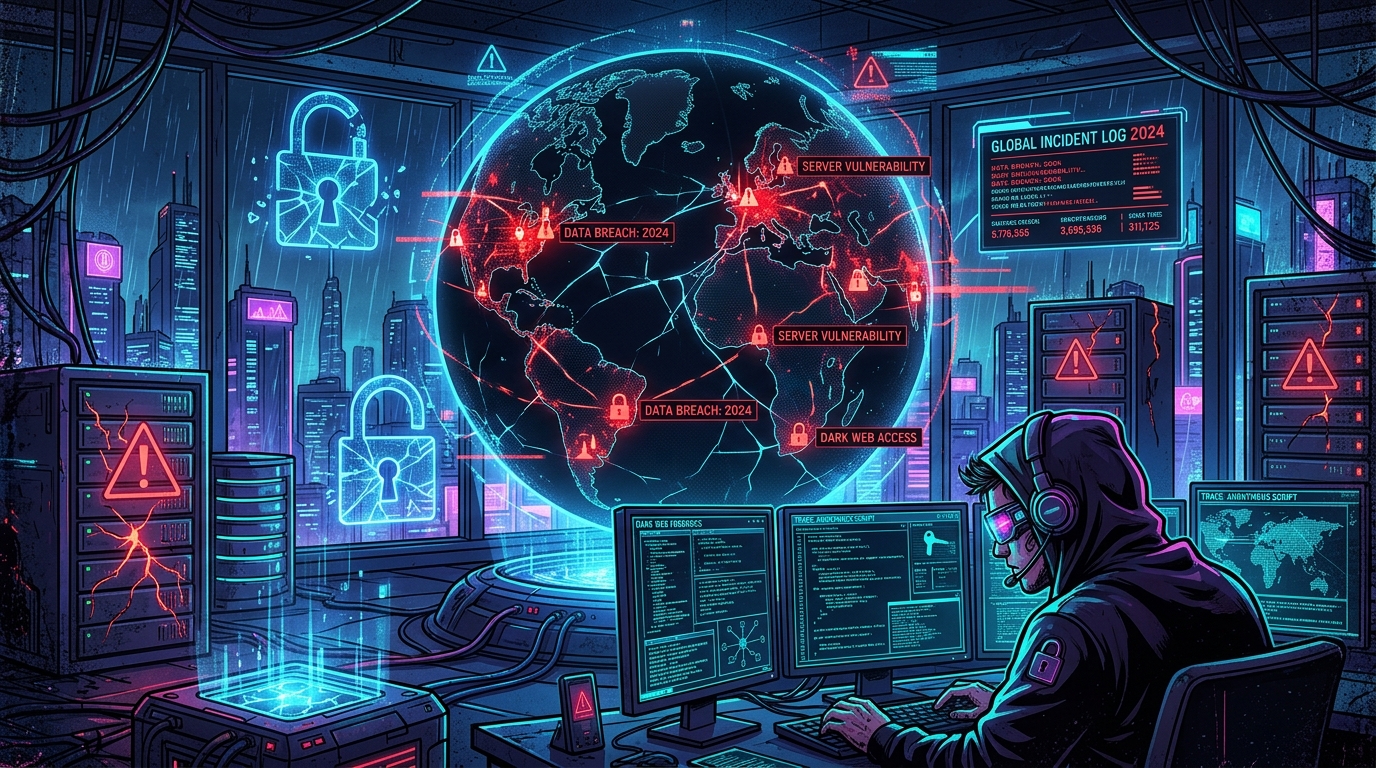
When cybersecurity historians look back at the digital landscape of the 2020s, the year 2024 will undoubtedly stand out as a terrifying inflection point. While previous years saw their fair share of data exposures, 2024 was characterized by "Megabreaches"—incidents so vast in scale and devastating in consequence that they fundamentally altered the way society views digital trust. The sheer volume of compromised Personally Identifiable Information (PII) reached unprecedented levels, affecting not just millions, but billions of individual records worldwide.
These breaches were not isolated incidents perpetrated by lone hackers in basements. They were the result of highly coordinated, well-funded Advanced Persistent Threat (APT) groups and Ransomware-as-a-Service (RaaS) syndicates. These threat actors utilized sophisticated supply chain attacks, exploiting single points of failure that cascaded through Fortune 500 companies, global healthcare systems, and critical telecommunications infrastructure.
In this comprehensive analysis, we will dissect the biggest data breaches of 2024, examining not just what was stolen, but how the attackers bypassed enterprise-grade security, and what these monumental failures mean for your personal digital safety.
The Anatomy of a Modern Megabreach
Before diving into specific incidents, it is crucial to understand why data breaches have scaled so dramatically. In the past, a hacker had to breach a company's physical servers or bypass a highly monitored corporate firewall. Today, the attack surface has expanded exponentially due to cloud computing.
The Cloud Misconfiguration Epidemic
The vast majority of corporate data is no longer stored in on-premise server racks; it resides in massive cloud environments like Amazon Web Services (AWS), Microsoft Azure, and Google Cloud Platform (GCP). While these platforms are inherently secure, they are incredibly complex to configure correctly. A single misconfigured AWS S3 bucket or a database left exposed to the public internet without proper authentication can result in terabytes of data being indexed by specialized dark web search engines like Shodan.
The Rise of Infostealer Malware
Another driving factor in 2024's megabreaches was the weaponization of Infostealer malware. Threat actors deploy malware like RedLine or Raccoon Stealer onto the personal computers of corporate employees (often remote workers). The malware silently extracts saved session cookies and passwords from the employee's web browser. Because the attacker uses a stolen, valid session cookie, they can bypass Multi-Factor Authentication (MFA) and log directly into the corporate network as a trusted user.
Incident 1: The Healthcare Sector Crisis (Change Healthcare)
One of the most consequential and devastating breaches of 2024 occurred within the United States healthcare infrastructure. The cyberattack on Change Healthcare, a subsidiary of UnitedHealth Group, was a watershed moment that demonstrated the fragile nature of interconnected medical systems.
How the Breach Occurred
In early 2024, the ALPHV/BlackCat ransomware syndicate infiltrated the Change Healthcare network. While the exact initial access vector was complex, subsequent investigations revealed a critical, shocking vulnerability: a remote access server was allegedly operating without Multi-Factor Authentication (MFA). In an era where MFA is considered the absolute baseline of security, its absence on a critical healthcare gateway allowed the threat actors to use stolen credentials to walk straight into the network.
The Devastating Fallout
Once inside, the attackers deployed ransomware, encrypting vast swaths of the network and stealing terabytes of highly sensitive data. Change Healthcare processes an estimated 15 billion healthcare transactions annually, touching one in three U.S. patient records.
The impact was catastrophic. For weeks, pharmacies could not process prescriptions, hospitals could not verify insurance eligibility, and medical providers were cut off from billions of dollars in essential revenue. The stolen data reportedly included the most sensitive information imaginable: medical diagnoses, treatment plans, Social Security Numbers, and billing information. This breach proved that cyberattacks are no longer just a data privacy issue; they are a direct threat to human life and public health infrastructure.
Incident 2: The Telecommunications Mega-Leak (AT&T)
Telecommunications companies hold the keys to modern identity. They control the phone numbers used for SMS-based Two-Factor Authentication, making them prime targets for cybercriminals. In 2024, AT&T confirmed a massive data leak that sent shockwaves through the cybersecurity community.
The Dark Web Auction
Rumors of a massive AT&T database circulating on the dark web had existed for years, but in March 2024, a threat actor published the full dataset on a notorious hacking forum for anyone to download. The dataset contained highly sensitive information for approximately 73 million current and former AT&T customers.
What Was Stolen?
The compromised data was a goldmine for identity thieves. It included full names, email addresses, physical mailing addresses, phone numbers, Social Security Numbers, dates of birth, and AT&T account passcodes. The inclusion of Social Security Numbers alongside dates of birth provides hackers with the exact cryptographic keys needed to bypass identity verification questions at banks and credit bureaus.
The SIM Swapping Threat
Perhaps most alarming was the exposure of account passcodes. A four-digit PIN is often the only thing preventing a malicious actor from calling customer service and executing a SIM-swap attack—transferring the victim's phone number to a hacker-controlled device. Once a hacker controls your phone number, they can intercept all of your SMS 2FA codes, allowing them to bypass security on your email, banking, and cryptocurrency accounts.
Incident 3: The Supply Chain Domino Effect (Snowflake Inc.)
If you want to poison a city, you don't break into every house; you poison the water supply. In cybersecurity, this is known as a Supply Chain Attack. Instead of attacking a well-defended corporation directly, hackers target the third-party software vendors that the corporation relies on. In 2024, the attacks targeting customer environments of Snowflake, a massive cloud data platform, demonstrated the devastating effectiveness of this strategy.
The Infostealer Vector
Snowflake provides cloud-based data warehousing to some of the largest companies on earth. Threat actors realized that if they could compromise a Snowflake customer account, they could extract massive amounts of data. The attackers utilized Infostealer malware to harvest valid credentials from the employees of Snowflake's clients. Because some of these client accounts did not enforce MFA, the attackers simply logged in and began exfiltrating data.
The Massive Blast Radius
This single vector led to a cascading series of megabreaches across multiple industries. Ticketmaster (Live Nation) confirmed that the personal data of 560 million global customers was stolen from their Snowflake environment. Shortly after, Santander Bank reported that data belonging to 30 million customers and employees had been compromised. Advance Auto Parts, LendingTree, and dozens of other massive corporations fell victim to the exact same attack vector.
This incident highlighted a terrifying reality: an enterprise's security is only as strong as the security posture of its third-party vendors and the personal devices of its employees.
The Evolution of Ransomware: Double and Triple Extortion
The megabreaches of 2024 were heavily driven by the evolution of ransomware tactics. Historically, ransomware was a simple transaction: hackers encrypted your files and demanded Bitcoin for the decryption key. By 2024, this model evolved into a highly sophisticated extortion economy.
Double Extortion
Because companies began keeping robust offline backups, simply encrypting files was no longer enough to guarantee a payout. Threat actors shifted to "Double Extortion." Before encrypting the network, they quietly download terabytes of the company's most sensitive data. The ransom demand is twofold: pay us to decrypt your network, AND pay us to prevent us from publishing your customer data on the dark web.
Triple Extortion
In 2024, we saw the aggressive rise of "Triple Extortion." If the breached company refuses to pay, the hackers do not just leak the data; they actively weaponize it. They will email the company's clients, patients, or business partners, informing them that their data has been stolen and urging them to sue the breached company. They may even launch Distributed Denial of Service (DDoS) attacks against the company's website to maximize the pressure.
What These Megabreaches Mean for the Average User
Reading about breaches affecting hundreds of millions of people can induce a sense of security nihilism—the feeling that because big corporations cannot protect data, there is no point in trying to protect yourself. This is exactly what cybercriminals rely on.
You must realize that you are collateral damage in corporate cyber warfare. When an APT group breaches a healthcare provider or a ticketing agency, they do not care about you personally. Their goal is to sell your data in bulk to lower-level fraudsters on forums like BreachForums or Telegram channels. It is these lower-level fraudsters who will use the stolen combo lists to attempt to log into your Amazon account, drain your cryptocurrency wallet, or open fraudulent credit cards.
Because your data has almost certainly been exposed in one of these megabreaches, your digital identity is currently sitting in a database waiting to be exploited.
Defensive Strategies for a Post-Breach Era
The lessons of 2024 are clear: you cannot rely on corporate security to protect your identity. You must build your own digital fortress based on the principles of Zero-Trust.
1. Assume Your Data is Already Compromised
Operate under the assumption that your email, phone number, and Social Security Number are already public knowledge on the dark web. This mindset shift forces you to implement security measures that do not rely on keeping these data points secret.
2. The Eradication of Password Reuse
If your password for a breached site (like Ticketmaster) is the same password you use for your email or bank, you are in immediate danger of a credential stuffing attack. You must use a Password Manager to generate a unique, 24-character cryptographic password for every single account you own. If a company is breached, the hackers only get a useless string of characters that unlocks nothing else.
3. Mandate Hardware-Based MFA
As the AT&T breach demonstrated, SMS-based Two-Factor Authentication is fundamentally broken due to the ease of SIM swapping. You must transition your high-value accounts (Email, Banking, Password Manager) to App-Based Authenticators (like Google Authenticator) or, ideally, hardware security keys like YubiKeys. Hardware keys provide absolute protection against phishing and credential stuffing.
4. Freeze Your Credit Profile
With massive amounts of Social Security Numbers leaked in 2024, identity theft is easier than ever. Contact the three major credit bureaus (Equifax, Experian, TransUnion) and place a permanent security freeze on your credit file. This prevents anyone from opening a loan or credit card in your name, even if they have your SSN and date of birth.
5. Utilize Email Aliasing
Stop giving your primary email address to every corporation that asks for it. Use services like SimpleLogin or Apple's Hide My Email to generate unique email aliases for every account you create. If a company is breached, you simply delete the alias, severing the hacker's connection to you.
Conclusion: 2024 is a Warning, Not an Anomaly
The megabreaches of 2024—from the healthcare sector crisis to the massive supply chain attacks—serve as a grim reminder of the fragility of our digital ecosystem. As long as data remains valuable, highly motivated and well-funded threat actors will find ways to extract it.
Corporate security will continue to evolve, but so will the tactics of the adversaries. By understanding the sheer scale of the threat landscape and implementing rigorous personal cybersecurity protocols, you can ensure that you are no longer a soft target. In the digital age, security is not a product you can buy; it is a discipline you must practice every single day.
Sources & Further Reading
The information in this article is based on the following authoritative sources:
- Identity Theft Resource Center (ITRC) — Authoritative non-profit tracking and reporting major data breaches globally.
- CERT-In Annual Report — India's official cybersecurity report detailing major breach incidents.
- Verizon Data Breach Investigations Report (DBIR) — Industry-standard annual report on global data breach trends and statistics.
Pwned Checker is committed to citing official and authoritative sources. All external links open in a new tab.
Was Your Email Compromised in this Security Incident?
Cross-reference your email, username, or passwords against billions of verified breach records using our zero-log lookup engine.
Check Your Email for Free →