
The Evolution of E-Commerce Fraud in India
In recent years, the exponential growth of online shopping platforms like Meesho, Flipkart, and Amazon has revolutionized how we purchase daily goods. However, this massive digital transition has also created a highly lucrative hunting ground for cybercriminals. While most users are aware of traditional phishing emails or fake lottery calls, a new, highly sophisticated scam is currently sweeping across India. It targets a vulnerability that most consumers never think twice about: the product return and refund process.
Unlike old scams that relied on sending suspicious links, this new Meesho Return UPI Scam uses precise social engineering, perfect timing, and the victim's own trust in the delivery ecosystem. It requires no hacking of your phone, no malware installation, and no complex technological exploits. All it takes is a single phone call and a momentary lapse in concentration involving a 6-digit OTP.
In this comprehensive, 2000-word security advisory, we will meticulously break down a real-life incident of this scam. We will examine the psychology the scammers use, the technical loopholes they exploit, and provide you with an unbreakable framework to protect your hard-earned money and digital identity.
The Incident: A Step-by-Step Breakdown of the Meesho Return Scam
To truly understand how to defend against this threat, we must first analyze exactly how the attack unfolds. The following is a real-life account of how a seamless e-commerce transaction was hijacked by a fraudster posing as a legitimate delivery executive.
Phase 1: The Setup (The Legitimate Return Request)
The victim, like millions of others, placed an order on the popular e-commerce platform, Meesho. Upon receiving the package, they realized the product was defective or not as described, and initiated a legitimate return request through the official Meesho application.
During the return process, the application correctly prompted the user to provide their banking details or UPI ID (Unified Payments Interface) where the refund should be credited once the item is picked up. The user confidently entered their correct UPI ID, expecting a standard, secure refund process.
At this point, the transaction is entirely secure. The vulnerability is not in Meesho's payment gateway; the vulnerability is in the real-world logistics chain.
Phase 2: The Interception (The Fraudulent Phone Call)
Within hours of initiating the return, the victim received a phone call. The caller confidently identified himself as the "Meesho Delivery Boy" assigned to pick up the return package.
The caller stated, "Sir/Madam, your order status hasn't updated correctly on my delivery device. Could you please confirm your phone number so I can manually update the return pickup in the system?"
This is where the psychological manipulation begins. The victim, slightly confused, replied, "But you are calling me on my number right now. How do you not have it?"
The scammer, well-rehearsed and entirely calm, deployed a brilliant technological excuse: "I scanned a QR code on the package slip to call you through our internal app. Your actual number is masked for privacy. I need the digits to manually process the return."
Believing this sounded like a plausible corporate privacy feature, the victim provided their mobile number.
Phase 3: The Critical Error (The OTP Request)
Armed with the victim's registered mobile number, the scammer immediately went to the Meesho application (or website) on their own device and entered the victim's number on the "Login" screen.
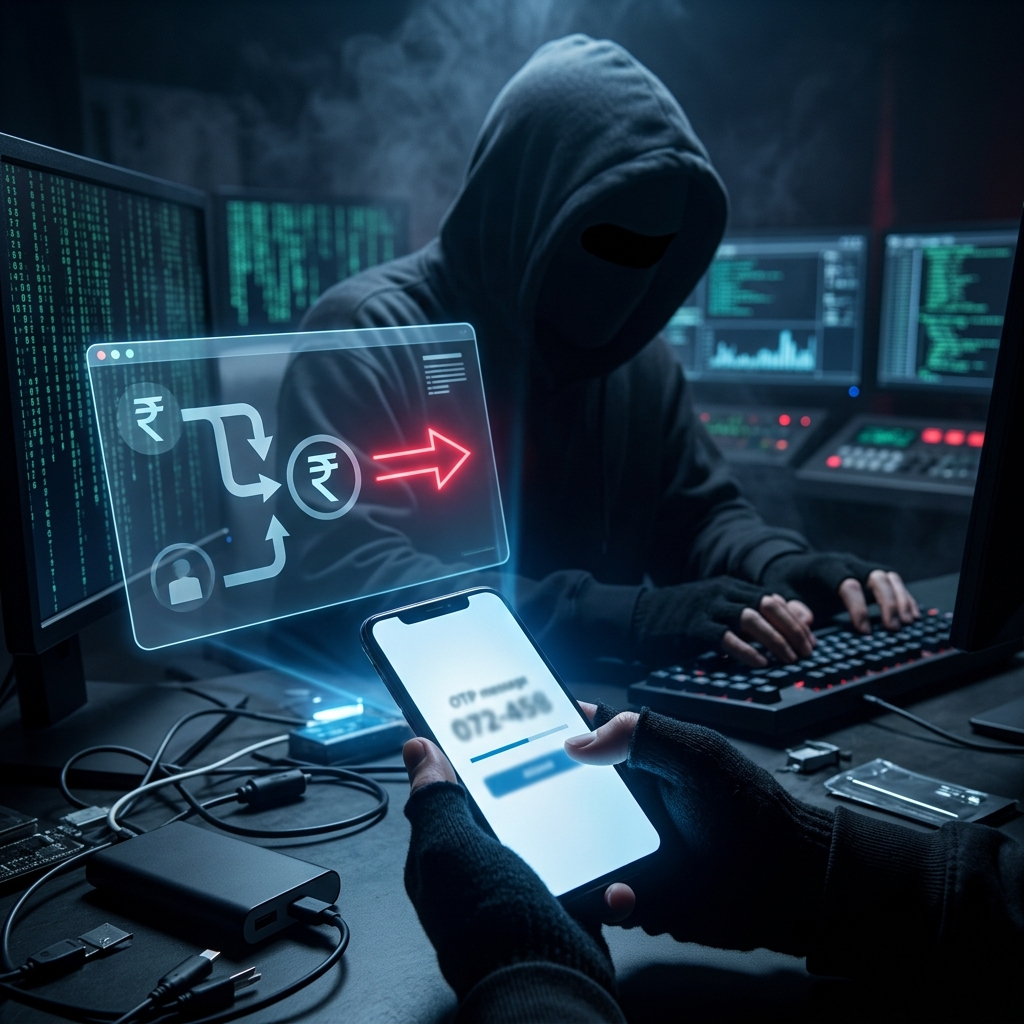
The scammer then told the victim over the phone: "Okay, I am updating the return status now. You will receive an OTP on your phone to confirm the pickup. Please tell me the OTP so I can close the ticket."
Right on cue, an SMS arrived on the victim's phone.
Operating on autopilot and wanting to get the return sorted, the victim started reading the OTP aloud. However, as they reached the 6th and final digit, their eyes caught the actual text of the SMS message: "This OTP is for Meesho Login. Do not share it with anyone."
Alarm bells rang. The victim immediately questioned the caller: "Wait, why does the message say this is for account login? Why are you trying to log into my Meesho account?"
Realizing the victim had caught on, the scammer immediately disconnected the call.
Phase 4: The False Sense of Security
The victim, having stopped reading the OTP just in time (or so they thought), assumed the danger had passed. The call was cut, the scammer was thwarted, and the account seemed safe.
The very next day, a different, legitimate delivery executive arrived, picked up the return package, and left. A few days passed.
When the victim checked their bank account for the refund, the money was missing. Confused, they opened the Meesho app and checked the return status. The app showed that the refund had been successfully processed within 5 to 10 minutes of the package being picked up.
However, when they looked closely at the refund details, a chilling realization hit them: The refund had been sent to a completely different, unknown UPI ID.
Phase 5: The Post-Mortem (How Did the Scammer Win?)
How did the scammer successfully steal the refund when the victim stopped reading the OTP at the last second?
The harsh truth of digital security is that sometimes, even partial information is enough. Depending on the speed of the victim's speech, the scammer might have guessed the final digit (there are only 10 possibilities, from 0 to 9, which takes seconds to brute-force manually). Alternatively, the victim might have unknowingly uttered the final digit just as they realized the mistake.
Once the scammer had the OTP, they successfully logged into the victim's Meesho account. They did not steal money directly from the victim's bank account—they simply navigated to the order details, clicked on the active return request, and updated the "Refund UPI ID" to their own personal UPI address.
When the legitimate delivery boy picked up the package the next day, the automated system triggered the refund. But because the scammer had altered the destination, the automated system faithfully sent the victim's money straight into the scammer's bank account.
The Anatomy of the Deception: Why This Scam Works
To prevent becoming a victim, we must understand why highly educated, digitally literate individuals fall for this specific trap.
1. Contextual Trust and Timing
If a random person calls and asks for an OTP, 99% of people will hang up. However, this scam relies on perfect timing. The scammer knows you just initiated a return. You are actively expecting a call from a delivery agent. The scammer adopts the persona of the exact person you are waiting for, borrowing the trust you place in the e-commerce platform.
2. The "Masked Number" Plausible Deniability
E-commerce companies do indeed use number-masking technology to protect customer privacy. Delivery agents often call through an app without seeing the actual digits. By claiming they need the number because of this very privacy feature, the scammer uses the platform's own security protocols as a weapon to lower your defenses.
3. Induced Urgency
The scammer creates a false sense of urgency. They imply that if you do not provide the OTP right now, the return will be canceled, or the pickup will fail. Humans are psychologically wired to comply when faced with the potential loss of money (the refund).
How to Protect Yourself: The Unbreakable Defense Blueprint
Now that you understand the mechanics of the Meesho Return Scam, here is an expert-level blueprint to ensure you never fall victim to this, or any similar social engineering attack.
Rule #1: The Absolute OTP Axiom
This is the golden rule of digital security, and it has zero exceptions: No legitimate delivery executive, customer support agent, bank employee, or government official will EVER ask you for an OTP over a phone call.
If a delivery agent requires an OTP to complete a delivery or pickup, you do not read it to them. You show them your phone screen, or you enter it into their device yourself, but you must read the context of the SMS first. If the SMS says "Login," you are being scammed. Period.
Rule #2: Read the Entire SMS Context
Our brains are trained to look for the 6-digit number and ignore the rest of the text message. Scammers rely on this cognitive blind spot. Before even looking at the numbers, read the English text preceding them.
- If it says "OTP for Login" - Someone is trying to access your account.
- If it says "OTP to authenticate payment of Rs. 5000" - Someone is trying to debit your account.
- If it says "OTP for password reset" - Someone is trying to lock you out of your account.
Rule #3: Never Provide Your Registered Mobile Number
If a delivery executive calls you, they already have a way to contact you. If their app is "glitching," tell them to contact their dispatcher or company support. Do not provide your actual 10-digit mobile number. Your phone number is the username to your digital life; do not hand it to strangers.
Rule #4: Verify Identity Through the App
If a caller claims there is an issue with your return, politely disconnect the call. Open the official Meesho (or Flipkart/Amazon) application and check the order status yourself. If there is a genuine issue, there will be an alert within the app. Alternatively, use the in-app chat support to verify the caller's claims.
Rule #5: Post-Incident Auditing
If you suspect you have made a mistake, even partially (like the victim in our story), you must assume your account is compromised. Take immediate action:
- Log into the app immediately and navigate to Security Settings -> Active Sessions. Log out all other devices.
- Check your Saved Payment Methods and UPI IDs on pending returns. Re-enter your correct details.
- Check your profile details to ensure the scammer hasn't changed your registered email or backup phone number.
The Broader Implication: Your Digital Identity
This scam highlights a critical flaw in modern digital infrastructure: the over-reliance on SMS-based OTPs as the sole method of authentication. While platforms are slowly moving towards Passkeys and App-based authenticators, SMS remains the lowest common denominator.
Furthermore, this incident underscores why it is vital to keep your digital identity compartmentalized. If a scammer gains access to your shopping account, they might only steal a refund. But what if they use the same tactics to access your primary email account?
We strongly recommend using our Pwned Checker Tool regularly. By entering your email address, you can instantly see if your credentials have been exposed in broader database leaks. A scammer who finds your email and a recycled password in a dark web dump doesn't even need to call you for an OTP—they can simply log in silently in the middle of the night.
Conclusion: Awareness is the Ultimate Antivirus
The Meesho Return Scam is a masterclass in social engineering. It bypasses firewalls, encryption, and biometric security by attacking the human element. The victim in our scenario did almost everything right—they questioned the caller, they read the SMS, and they stopped talking. Yet, the scammer still won because of a split-second vulnerability.
As e-commerce continues to integrate deeply into our daily lives, we must elevate our baseline level of suspicion. Treat every unsolicited phone call as a potential threat. Guard your OTPs like you would guard your physical wallet. And remember, in the digital age, a healthy dose of paranoia is not a flaw; it is a necessary survival skill.
Share this article with your family and friends—especially older relatives who might not be as digitally native. Education is our strongest collective defense against the evolving landscape of cyber fraud.
Sources & Further Reading
The information in this article is based on the following authoritative sources:
- CERT-In (Indian Computer Emergency Response Team) — India's national agency for cybersecurity — issues advisories on phishing and OTP fraud.
- NPCI UPI Safety Guidelines — Official UPI guidelines from National Payments Corporation of India on safe transactions.
- Ministry of Home Affairs — Cybercrime Portal — India's official platform to report cybercrime and OTP scams.
Pwned Checker is committed to citing official and authoritative sources. All external links open in a new tab.
Was Your Email Compromised in this Security Incident?
Cross-reference your email, username, or passwords against billions of verified breach records using our zero-log lookup engine.
Check Your Email for Free →